Haute couture: what it is and how it differs from prêt-à-porter
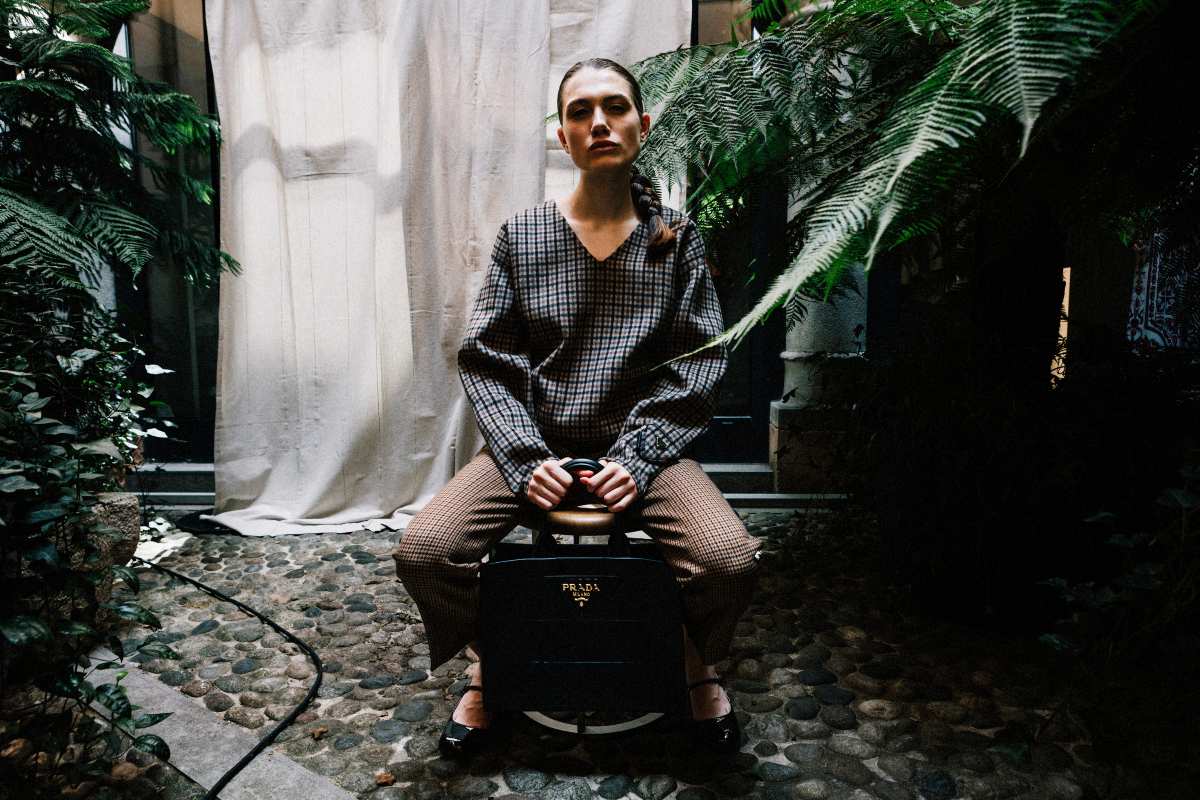
Haute couture: a French expression that evokes a form of tailoring art, exclusive and made to measure, where artisan savoir faire finds its fullest expression in the love, more than the attention, for detail.
Details that surprise, and that turn a garment into a manifesto of the fashion house that made it.
Valentino's Haute Couture FW23 show, held in Rome at the beginning of July, is the proof.
The show opened with Kaia Gerber in slouchy vintage trousers: at first glance an ordinary denim, in truth a fabric embroidered bead by bead in eighty shades of indigo.
Let us step into the world of haute couture and look at its origins, its evolution and its rules.
When was haute couture born?
The birth of haute couture has a name, a date and a place: Charles Frederick Worth, 1860, Paris.
Worth is universally known as the father of haute couture, the first couturier and the pioneer of fashion as we understand and live it today.
After spending his teenage years working for textile merchants in London, Worth moved to Paris at the age of twenty.
His creative talent and his innovative vision were noticed quickly in Parisian fashion: his dresses were shown at the Great Exhibition in London in 1851 and at the Exposition Universelle in Paris in 1855.
And there is more.
Worth is credited with conceiving and spreading the very idea of tailoring as we mean it.
Every one of his dresses was made by hand, from nothing, with fine materials cut and sewn on the client's own silhouette, following her preferences and her way of dressing.
This is the turning point: the tailor becomes a couturier.
That the birth and the growth of haute couture belong to Worth, then, is beyond doubt.
The setting? Easy to picture.
The crisp air of Paris, wrapped in a vintage, romantic mood, with the sophisticated women of high society visiting the most renowned ateliers.
Fashion boutiques were the emblem of exclusivity and craft, places where designers worked precious cloths into dresses made for one person.
And it is with the nineteenth century that names such as Christian Dior, Cristobal Balenciaga, Coco Chanel and Elsa Schiaparelli entered the haute couture world, changing its rules and its perception for the better.
But let us take it in order.
How high fashion evolved
After the Second World War high fashion was finally reborn.
What rekindled the creative drive of designers and couturiers was the New Look collection by Christian Dior, launched in 1947 and the pioneer of a new stylistic code.
Squared shoulders, a narrow waist and full skirts would define the decades that followed.
It was in the fifties and sixties that Paris took back its title as the beating heart of high fashion, and began to embrace the technological innovation of the time.
And if fashion is seasonal, haute couture too adapts to its age, renewing its aesthetic codes with contemporary elements.
In step with the novelties and the social changes of the time, but always with the same ethic: craft and tailoring.
Through the fifties the scene was stolen by the creative flair of Balenciaga, which took shape in fluid lines that, minimal as they were, spoke of a clear stylistic direction.
And while Coco Chanel brought a wave of chic, practical style with her iconic longuette skirts, the creations of Elsa Schiaparelli were a quiet explosion of art and fashion.
The success of high fashion was crowned by Valentino, with his first collection at Palazzo Pitti in 1962.
Which are the haute couture houses today?
Today the haute couture maisons represent the summit of prestige in luxury fashion.
They are houses with a heritage of real value, from incisive creativity to impeccable craft.
From Valentino under Pierpaolo Piccioli to Christian Dior with Maria Grazia Chiuri, through Givenchy with the creative direction of Matthew Williams, Atelier Versace and Maison Margiela.
Every house has a distinctive signature and a vision of its own, which shows in creations that have become icons of style.
It should be said that most of these houses have taken part in modern life, translating their work into ready to wear as well.
What is the difference between haute couture and prêt-à-porter?
The difference lies in how the garment comes to be. Haute couture makes unique pieces, hand sewn to measure for a single client, with several fittings in the atelier and weeks of work. Prêt-à-porter, that is "ready to wear", produces collections in standard sizes, in series, available in store straight away.
In practice:
- Measurements: made to measure for the client in haute couture, standard sizes in prêt-à-porter.
- Making: almost entirely by hand in the atelier on one side, series production on the other.
- Time: weeks or months for a single dress, against garments available as soon as they are out.
- Who may use the name: "haute couture" is a protected denomination in France, reserved to the houses recognised by the Fédération de la Haute Couture et de la Mode, which show in Paris in January and in July. Prêt-à-porter is open to any brand.
- Price and audience: haute couture is for a very small number of clients in the world, while luxury prêt-à-porter brings the same taste and the same quality to a much wider audience.
Luxury prêt-à-porter was born in the sixties, when designers such as Pierre Cardin and Yves Saint Laurent brought their signature to collections ready to wear. Today it is the heart of the work of almost every great house, and it is what you find in boutiques and on Cumini: Women and Men.
Haute couture: the requirements
The haute couture denomination was registered legally on 23 January 1945, with guidelines managed by the Chambre Syndicale de la Couture.
To be recognised as haute couture, a house should:
- make garments to measure and by hand for every client;
- present its collections twice a year, in January and in July;
- show at least fifty entirely original creations in each collection, with day and evening dresses;
- have its workshop in Paris, with at least twenty employees.
Strict requirements, but telling about the quality the name of high fashion carries.
Conclusions
Haute couture stands as the fullest expression of art and creativity in fashion.
These houses challenge the boundaries of tradition, giving life to garments made exclusively to measure that have the power to inspire trends and new lines of style.